Shhh, They're Playing: Inside America's Quietest Night Out
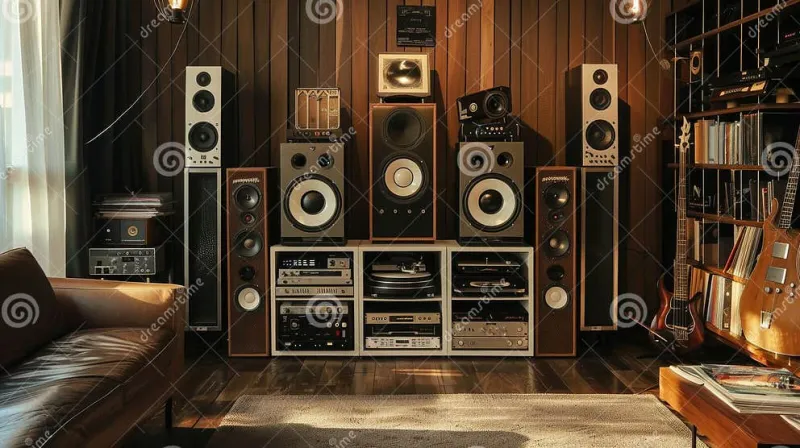
Photo: listening bar vinyl record hi-fi speakers dark moody interior, via thumbs.dreamstime.com
Let me describe the hottest ticket in a handful of American cities right now, and you tell me what's wrong with this picture.
Forty people. A single, absurdly expensive sound system. The lights turned down to almost nothing. A bartender who gestures instead of speaks. And for the next forty-five minutes, everyone in the room sits perfectly still while an album plays — no conversation, no phones, no requests. Just listening. Deliberately. Together.
If that sounds less like a night out and more like a hostage situation with good speakers, you're not alone. But listening bars — modeled loosely on Japan's kissaten culture and the jazz kissa tradition — have been quietly multiplying across Brooklyn, Los Angeles, Portland, and Chicago. And the more time I've spent in them, the more I think they're not a novelty at all. They're a correction.
The Radical Act of Doing One Thing
Every other venue in American nightlife is built on the promise of more. More screens, more stimulation, more options. The listening bar is built on the promise of less — specifically, less of everything except the music. That's the entire pitch. Sit down. Be quiet. Pay attention.
And here's the thing people don't expect: it's genuinely emotional. When a room full of strangers goes silent for the opening track of an album everyone knows, something happens that no festival main stage can manufacture. You can feel two hundred ears lean in. There's a theater to it — the communal inhale when the needle drops, the collective exhale between sides. It's closer to a film screening than a bar night, and the best rooms honor that. Some hand out programs. Some dim the lights during playback and bring them up between records, like intermission.
The etiquette is enforced with surprising seriousness. Regulars will gently shush you. Phones are expected to disappear, not just dim. One spot in LA has a house rule that conversation happens in the garden, not the listening room — a layout that turns the whole venue into a negotiation between connection and attention.
Why Now? Blame the Feed
The obvious question: why would a culture that can't sit through a three-minute video without reaching for its phone voluntarily pay a cover to sit through a forty-minute album?
Exactly because of that. The listening bar is the nightlife equivalent of the dopamine fast. Everyone in the room knows they're broken in the same way, and the room is the remedy. It's attention as a group activity — which, weirdly, makes it easier than doing it alone. Nobody checks their phone at home during a record. Everyone resists checking it when the person next to them is visibly locked in.
There's also a curation angle that scratches a very modern itch. These rooms tend to book their playback like venues book bands — deep catalog, rarities, full albums that algorithms would never serve you front to back. You're not just hearing music; you're hearing someone's argument about music. The vinyl-only setups, the custom horn-loaded speakers that cost more than a house, the obsessive sound treatment on the walls — it all signals the same thing: this matters, and we're taking it seriously so you can too.
The Cynic's Objection, Addressed
Look, I get the critique. Paying $14 for a cocktail to sit in silence is peak urban wellness-industrial complex behavior. There's something faintly absurd about a room full of people performing attentiveness at each other.
But spend one full album in a good room and the cynicism gets harder to hold. The listening bar isn't really about the sound system, or the natural wine, or the aestheticized minimalism. It's about permission. It gives adults a socially sanctioned excuse to do something almost nobody does anymore: give one piece of art their complete attention, in the company of others, without a screen between them and it.
We've spent a decade optimizing music for background consumption — playlists for focus, for workouts, for falling asleep. The listening bar is the counter-reformation. It insists that music is not a utility. It's an event.
And apparently, enough Americans are starved for that kind of event that they'll pay a cover charge, hold their tongue, and sit in the dark for it. Nothing happens at a listening bar. That's the whole point. That's everything.