The Hoodie Economy: Why Your Favorite Artist's Real Tour Is Happening at the Merch Table
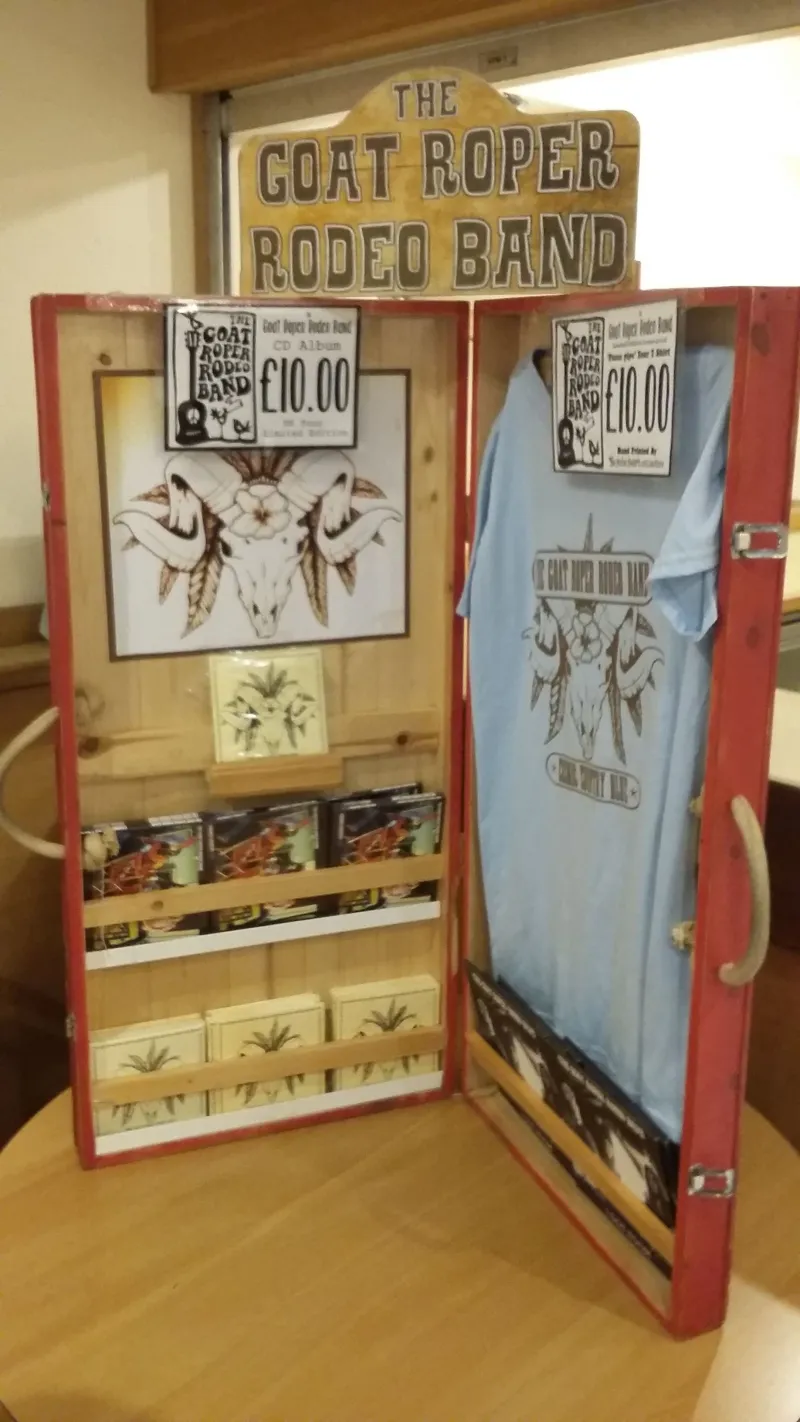
Photo: band merch table t-shirts concert venue folding rack, via i.pinimg.com
There's a moment that happens at every show in America, usually around song six or seven, when the lights are still low and the band is mid-chorus — and somewhere in the back, a fan is already doing the math. Can I afford the tee and a beer? Should I skip the beer? Do they have this hoodie in a medium that isn't cropped weird?
That math is the real business model now. Not the ticket. Not the stream. The table by the wall with the folding racks and the card reader that's somehow always glitching.
Streaming Pays Rent. Merch Pays Mortgages.
Here's the number that gets thrown around in every artist group chat: a stream pays a fraction of a cent. A $40 hoodie, printed for maybe $12 and sold by the band themselves, can put $25 or more directly in their pocket. One hoodie equals thousands of streams. Do that thirty nights a tour and you're not just covering gas — you're paying for the record.
This is why the merch table has evolved from an afterthought into a full-blown retail operation. Some mid-level touring acts now gross more from a single night of merch than from their entire guarantee for playing. The venue takes a cut of the ticket. The label takes a cut of the masters. The merch table, in most deals, is one of the last places where the money goes straight to the person who made the thing.
Fans have figured this out, too. There's a whole cohort of concertgoers — especially the twenty-somethings who grew up knowing exactly how broken streaming economics are — who treat buying a shirt as the point. Not a souvenir. A transaction with moral clarity attached. You liked the show? Here's $35 and a clear conscience.
The Psychology of the Folding Table
Merch pricing is its own dark art. The classic move is the "tour exclusive" — a shirt you can technically buy online later, but not in this colorway, not with this date on the back, not with this slightly inside-joke graphic that only people in the room will understand.
Scarcity does the heavy lifting. So does timing. Smart artists drop the good stuff early, before the crowd has spent their drinking budget. Smarter ones hold a surprise design until the encore, when emotional peak and purchasing impulse align perfectly. Some acts have started hiring actual merch managers — people whose entire job is inventory, sizing curves, and the eternal question of whether the crowd skews oversized tee or fitted.
And then there's the markup psychology, which mirrors streetwear culture almost exactly. A plain black tee is a $15 item. A plain black tee with a warped album cover and the words "North American Tour 2025" under it is $45, and nobody blinks. The fan isn't buying cotton. They're buying proof of presence — a receipt for a night that already happened.
When the Design Outgrows the Music
But here's where it gets uncomfortable. If merch is the biggest revenue line, the incentive isn't just to make great shirts — it's to make shirts that sell whether or not the music does. And some artists have noticed the tail wagging the dog.
There's a growing subset of acts whose aesthetic is arguably stronger as apparel than as sound. You've seen them: the band whose logo looks incredible on a crewneck, whose whole visual identity feels engineered for the parking lot photo, for the Instagram mirror shot, for strangers asking "oh, what's that from?" The merch becomes the marketing becomes the music becomes the merch. It's a closed loop, and not every artist in it is making songs worth streaming in the first place.
Critics have started calling this "merch-forward music" — acts that design for the table first and the stage second. It's not automatically cynical. Plenty of great bands have iconic visual identities. But when a tour's profitability depends on moving cotton, the temptation to lean into the brand at the expense of the art is real, and everyone from managers to fans can feel it happening.
The Most Honest Money in Music
Still, it's hard to work up too much outrage. In an industry where the default is extraction — labels recouping, platforms skimming, venues taking cuts of everything down to the poster sales — the merch table is refreshingly transparent. Fan hands over cash. Artist keeps most of it. Everyone knows what's happening and why.
Compare that to the streaming arrangement, where even dedicated listeners often can't tell you what their monthly subscription actually pays out, or to whom. At least with a hoodie, the exchange is legible. You can hold it. You can wear it. You can watch the singer see you wearing it next time around and know, in some small way, you helped make that possible.
So yes, the shirt costs more than the ticket. The hoodie sold out before the encore. And honestly? For a lot of artists trying to survive in 2025, that folding table in the back of the room isn't a side hustle.
It's the whole show.