The Art of Saying Nothing: How Silence Became the Loudest Flex in Music Right Now
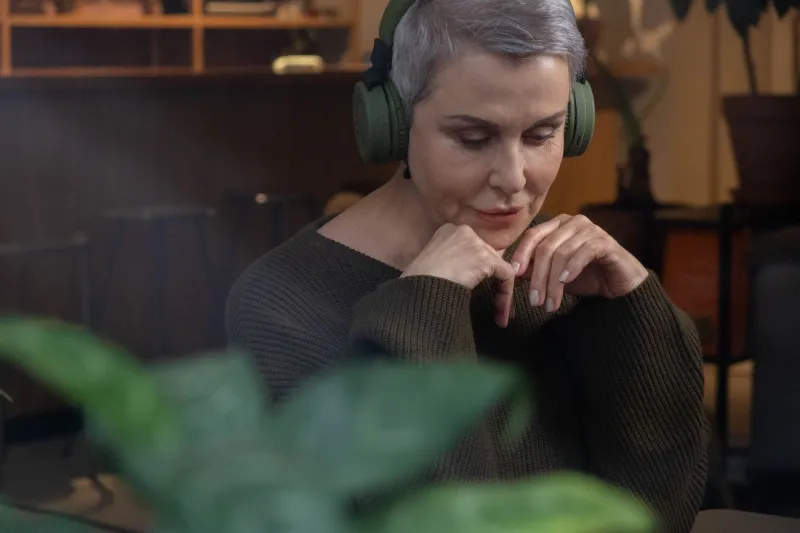
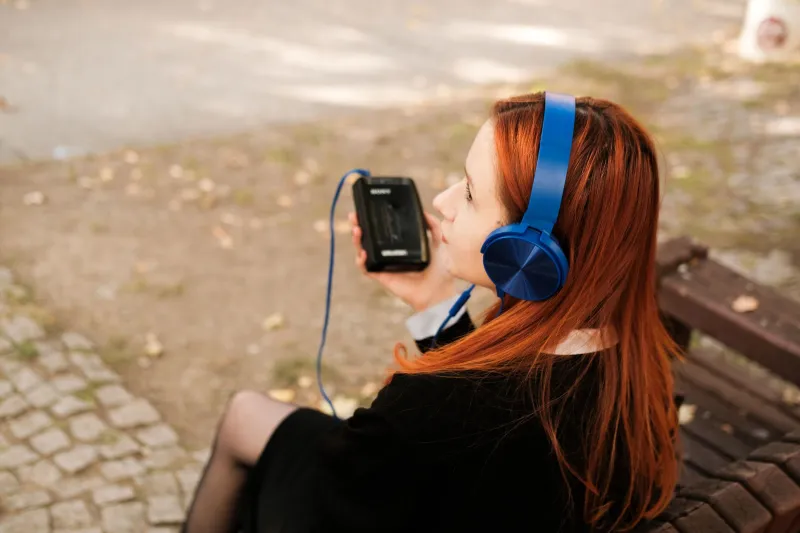
The track opens and there's almost nothing there. A low hum. Maybe a single piano note that decays slowly into room tone. If you're listening in a noisy environment, you might think something's wrong with your speakers. If you're listening the way the artist intended — headphones, alone, lights low — you feel it immediately. The absence is doing something. The quiet has weight.
This is not an accident. It's a statement.
In a cultural moment defined by relentless overstimulation — infinite scroll, autoplaying videos, podcasts filling every silent commute — restraint has become one of the most radical things an artist can practice. And audiences are responding to it in ways that are surprising the industry and redefining what "standing out" even means.
The Noise Floor Has Never Been Higher
To understand why silence hits differently right now, you have to understand what it's competing against. The average American adult is exposed to somewhere between six and ten hours of media per day. Streaming platforms are optimized for engagement, which tends to mean more — more drops, more hooks, more moments designed to prevent the skip. The loudness wars of the early 2000s, where mastering engineers competed to make tracks physically louder, have evolved into an attention war where every element of a song is engineered to demand your focus immediately.
In that context, an artist who refuses to compete on those terms isn't just being stylistically different. They're making a philosophical argument. They're saying: I trust you to lean in. I'm not going to chase you.
That kind of trust is rare enough that it reads as confidence. And confidence, in any era, is magnetic.
Ambient Music's Unlikely Cultural Comeback
Nothing illustrates this shift better than the quiet resurgence of ambient music in mainstream cultural conversation. Brian Eno basically invented the genre in the late '70s with the explicit goal of creating music that could be either actively listened to or comfortably ignored — music that worked like light in a room rather than a spotlight demanding your attention.
For decades, ambient lived at the fringes. It was wellness music, study music, background music. It didn't chart. It didn't trend.
And then something shifted. Artists like Sable, Grouper, and William Basinski started developing serious critical followings. Spotify's "lo-fi beats" playlists became some of the platform's most-streamed content. The YouTube channel "Lofi Girl" accumulated billions of plays. And more recently, artists like Billie Eilish and Bon Iver have incorporated ambient textures and extended silences into mainstream work in ways that feel less like genre-borrowing and more like genuine aesthetic conviction.
The pandemic accelerated all of this. When the world went quiet in 2020, people discovered that they'd been drowning in noise they'd stopped noticing. The sudden absence was disorienting, then clarifying. Music that matched that frequency — slow, spacious, undemanding — found an audience that hadn't known it needed it.
The Pause as Compositional Tool
In production specifically, the use of silence — actual silence, not just low volume — has become a sophisticated technique that separates the intentional from the merely busy. Think about the way Frank Ocean uses breath and space on Blonde. The way certain tracks feel like they're happening in real time, with all the awkward pauses and ambient room noise that implies. It's the opposite of the polished, compressed sound that dominated the previous decade of pop production.
Or consider the drop that never quite drops. Electronic and hip-hop producers have figured out that the anticipation of release can be more powerful than the release itself. The buildup that resolves into something quieter than expected — a single snare, a held chord, a voice with no reverb — creates a kind of intimacy that a wall of sound can't manufacture.
This is psychoacoustics being used with real intention. The ear doesn't process silence as nothing. It processes it as potential. As meaning that hasn't revealed itself yet. A producer who understands that is working with one of the most powerful tools available, and it costs nothing.
Doing Less as Cultural Capital
Outside of music specifically, a broader cultural logic is at work here. Minimalism has been a luxury aesthetic for a while — think the clean lines of high-end fashion, the deliberate emptiness of expensive interior design, the conspicuous absence of logos on things that cost the most. There's always been a class dimension to restraint. Having less, visually and sonically, signals that you don't need to try hard.
That logic has migrated into how we evaluate artists. The ones who post constantly, who fill every gap with content, who never leave space for mystery — they can feel desperate in a way that undercuts their credibility regardless of talent. The ones who go quiet, who release sparingly, who let the anticipation build until it's almost unbearable — they accrue a kind of cultural authority that no amount of promotional activity can manufacture.
This isn't new exactly. But the contrast has never been sharper, because the baseline noise level has never been higher. Silence used to be neutral. Now it's a choice. And choices communicate.
What the Quiet Is Actually Saying
There's a version of this conversation that gets too precious — that treats minimalism as inherently more sophisticated than maximalism, or that equates quietness with depth. That's not quite right. Plenty of restrained music is boring. Plenty of loud, chaotic, overwhelming music is genuinely transcendent.
The point isn't that silence is better. The point is that in a specific cultural moment, choosing silence is an act of resistance. It's refusing to participate in the competition for the loudest, fastest, most instantly gratifying. It's an argument that attention is something to be earned slowly, not captured immediately.
And in a landscape where everyone is screaming to be heard, the artist who stands still and waits for you to come closer might be making the most powerful move of all.