You're Listening Alone Now and That's the Whole Problem

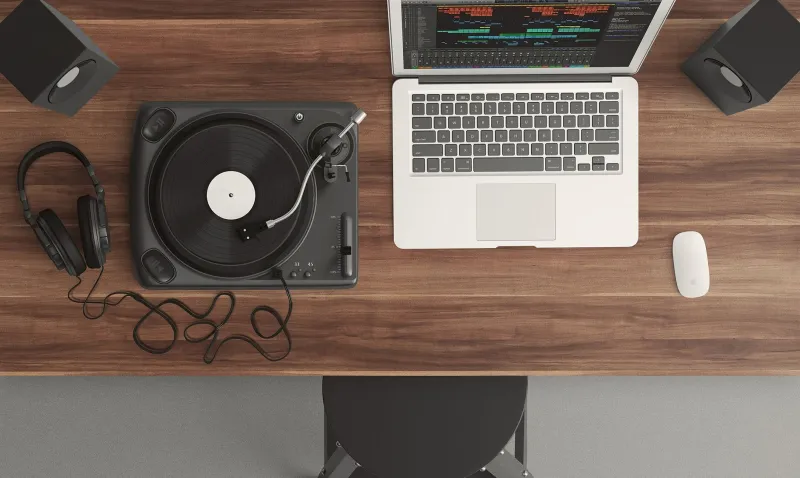
Photo by Photo by Vitaly Gariev on Unsplash on Unsplash
There's a specific kind of magic that used to happen in cars. Someone would reach over, plug in their iPod — or before that, slide in a burned CD with a Sharpie-scrawled title — and say listen to this part, wait for it, here it comes. That moment of anticipation, of watching someone's face as a song hit them for the first time, was its own experience entirely. Not just music. Something more.
That moment is getting harder to find.
We're living through the most abundant era of music access in history. Spotify alone hosts over 100 million tracks. Apple Music, Tidal, YouTube Music — the combined catalog of human sonic output is essentially at your fingertips for the price of a mediocre lunch. And yet, ask anyone who grew up sharing burned CDs or calling in requests to late-night radio shows, and they'll tell you something feels off. The music is there. The feeling around it? That's gotten a lot quieter.
The Playlist Is Not a Gift Anymore
The mixtape was an act of intimacy. Full stop. When someone made you one — carefully sequencing songs, thinking about the arc, writing the track list in their own handwriting — it was a statement. This is how I hear the world. I want you to hear it too. The music was almost secondary to the gesture. You were being let inside someone's head.
The curated playlist is technically the same thing, but it's not. Not emotionally. When you share a Spotify playlist now, it arrives without friction. No blank tape, no sitting next to a boombox with your finger on the record button, no decisions about what gets cut because you only have 74 minutes. The effort is gone, and with it, a lot of the meaning.
Worse, most of the playlists we actually listen to weren't made by anyone we know. They were assembled by an algorithm or a faceless editorial team at a streaming service, optimized for mood or activity or moment — "chill morning vibes," "focus flow," "sad girl autumn." They work, in the narrow functional sense. The music fits the vibe. But there's no human fingerprint on them. Nobody put their heart into it. You're not learning anything about another person when you hit play.
Radio Was Chaotic and That Was the Point
Here's something worth sitting with: the randomness of old radio was a feature, not a bug.
You'd be driving somewhere forgettable — a Tuesday errand run, a long highway stretch — and a song would come on that you'd never heard, and it would flatten you. And the crucial thing is that millions of other people heard it at the same moment, or close to it. The next day at school or work, someone would say did you hear that song? and you'd both know exactly which one. That shared exposure created a kind of cultural glue. Music wasn't just something you consumed; it was something that happened to you in public, alongside other people.
The algorithm doesn't do that. It can't. Its entire design philosophy runs in the opposite direction — away from the shared and toward the individual, away from the unexpected and toward the confirmed preference. Every time you skip a song, you're training it to stop surprising you. Every "liked" track tightens the walls of your taste just a little bit more. It's optimization, and optimization is the enemy of the kind of discovery that actually changes you.
What We Actually Mean When We Say We Found a Song
There's a cultural flex that's emerged in the last decade around being the person who "found" something first. The deep-cut listener, the one who knew the artist before the album, before the tour, before the sync placement in a Netflix show. That's a real thing, and it matters to people in a real way. But it's worth asking: found it how? Found it with whom?
A lot of what gets called discovery now is really just algorithmic delivery. The song appeared in your Release Radar or your Discover Weekly, and it was good, and you liked it. That's not nothing — the song still hit, the feeling was real. But it's different from the friend who texts you at 11pm saying I need you to hear this right now, different from being at a house party when a song comes on and watching a room full of strangers suddenly become a room full of people who are in it together.
The social context of discovery is where a lot of music's emotional weight actually lives. Not in the headphones. In the handoff.
The Concert Is Holding On for a Reason
It's not a coincidence that live music has remained stubbornly, almost defiantly, irreplaceable in the streaming era. People will spend $200, $300, more, to stand in a crowd and hear songs they already know by heart. That should be economically irrational. If the point were just the music, you'd stay home.
But the point was never just the music. It was always the room. The collective breath-hold before a favorite song drops. The stranger next to you who knows every word. The moment when an artist says something between songs and you feel like they're talking directly to your particular 2am. Concerts persist because they are the last widely accessible space where music is still a group activity, still something that happens between people rather than to an individual.
Streaming didn't kill that — but it did make it feel more precious, more exceptional, more like an escape from the default rather than the default itself.
Getting Some of It Back
None of this is an argument for going back. The access is real, and it matters. Artists who would have been invisible outside of their city or their scene can now reach people across the country, across the world, on their own terms. That's genuinely worth something.
But it's worth being intentional about the social layer. Share music with people directly, not just as a playlist drop but as a here's what I've been thinking about, here's why it wrecked me. Go to the show even when the couch is comfortable. Sit in the car with someone and let the song finish before you talk about it. Start the conversation that the algorithm can't start for you.
Music has always been most powerful as a bridge — between people, between moments, between the version of yourself that heard a song for the first time and the version you became after. The playlist is a tool. The connection is the point.
Don't let the tool make you forget that.