The Playlist That Breathes: Why Leaving Space Is Becoming the Ultimate Curatorial Statement

At some point, the playlist stopped being a selection and became a wall. Forty tracks, no pauses, every transition optimized for zero drop-off. Algorithmic playlists are engineered to keep you inside them indefinitely — momentum maintained, attention captured, silence treated as a failure state.
Some people are done with that. And they're pushing back in the most counterintuitive way possible: by removing things.
The Economics of More
To understand why restraint is starting to feel radical, you have to understand how thoroughly the streaming economy is built around volume.
Every major platform's incentive structure rewards content density. More tracks means more streams. More streams means more data. More data means better algorithm training. The curator who builds a fifty-song playlist is more useful to the platform than the one who builds a tight ten-track sequence with room to breathe between ideas. The metrics don't reward intention. They reward output.
This shapes not just the playlists themselves but the listening habits that form around them. When you're conditioned to receive music as an unbroken stream, you stop experiencing individual tracks as discrete objects with their own weight. They become part of a continuous texture — background radiation more than foreground experience. You're technically listening, but you're not really hearing anything.
The curators who are pushing back against this aren't being precious. They're responding to a genuine listener need that the platform model has spent years training people to suppress.
What Sparse Actually Means
It's worth being specific about what intentional sparseness looks like in practice, because it's not just about fewer songs.
It's about sequencing that allows a track to fully resolve before the next one begins. It's about the deliberate choice to put two slow songs back to back when the algorithm would never do that. It's about including a piece of music that asks something of the listener — attention, stillness, a little patience — instead of just delivering a smooth dopamine loop.
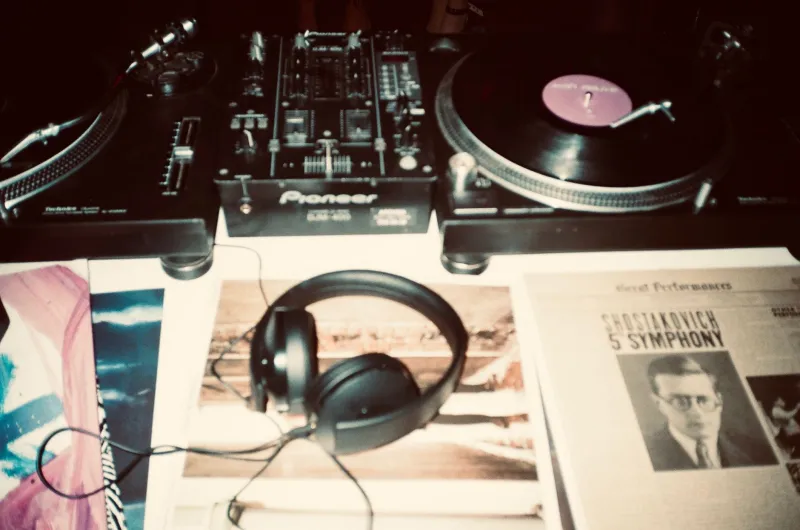
Some DJs have been doing this for years in live contexts, using silence and space as compositional tools. The beat drop lands harder after a moment of quiet. The emotional peak hits differently when you've been made to wait for it. These are old techniques from performance and classical composition that translate surprisingly well to the playlist format — if you're willing to accept that some listeners will drop off because the algorithm told them to expect something different.
The willingness to accept that drop-off is actually part of the point. Sparse curation is a signal. It says: this is for the people who stay.
Silence as Luxury Branding
There's something almost paradoxical about the way intentional restraint has started functioning as a status marker in the curation world.
In an attention economy, the most valuable thing is someone's full, unhurried engagement. That's become genuinely scarce. And like most scarce things, it's started to carry a premium. The playlist that doesn't try to hold you hostage — that trusts you to come back after the space — is communicating something about its own confidence. It's not desperate for your attention. It's offering you the option to pay it.
This is how luxury has always worked. The boutique with less merchandise on the floor. The restaurant with the shorter menu. The magazine with the longer paragraphs. Restraint signals that the curator trusts the quality of what's there, and that trust transfers to the listener. You feel like you're being treated as someone capable of handling something real.
For a certain segment of music listeners — people who are genuinely fatigued by algorithmic maximalism but still deeply invested in music as a meaningful experience — this is exactly what they've been waiting for.
The DJs and Tastemakers Leading the Quiet Movement
You can see this sensibility playing out across several different contexts right now.
In the DJ world, there's a renewed interest in long-form listening experiences — sets that develop slowly, that don't peak until well into the second hour, that treat the room as a place where time can move differently. The Instagram-optimized ten-minute mix still exists, but it's being consciously rejected by artists who are more interested in what happens when you give an audience enough time to fully arrive somewhere.
In the playlist curation space, some of the most followed accounts on streaming platforms and music communities are the ones that update infrequently and deliberately. A playlist that gets five new tracks a month, carefully chosen, carries more weight than one that refreshes daily. Scarcity of update creates anticipation. Anticipation creates genuine engagement rather than passive consumption.
Even in the ambient and lo-fi spaces — which streaming platforms have largely turned into productivity background noise — there's a counter-movement building around music that demands to be the primary focus. Not background. Foreground. Just quieter.
What the Gap Is Actually Saying
The return to intentional space in curation is ultimately a conversation about what music is for.
If music is primarily functional — a tool for focus, exercise, mood management — then the algorithmic maximalist model makes perfect sense. Optimize for continuous delivery of the desired state. No interruptions. No friction.
But if music is also something else — a way of being present, of processing time, of actually feeling something rather than just maintaining a feeling — then the unbroken stream is actively working against the goal. You can't be moved by something you're not paying attention to. And you can't pay attention to something that's designed to never let you look away.
The gap, the pause, the breath between tracks — these aren't failures of curation. They're invitations. They're the moment when the music you just heard gets to actually land before the next thing arrives to replace it.
In a playlist economy that's forgotten how to wait, that invitation is worth more than it's ever been.