Dead Voices, Living Beats: How Sampling Became Hip-Hop's Most Sacred Archive
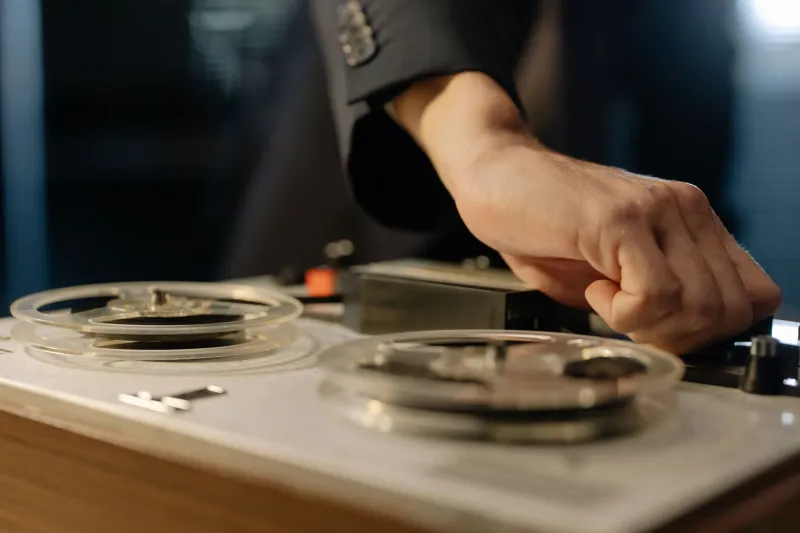
Somewhere in a Brooklyn apartment, a producer is flipping through a crate of records that smell like someone else's basement. They're not looking for something to copy. They're looking for something to resurrect. A vocal run that never got its moment. A chord progression that deserved a bigger room. A rhythm that was ahead of its time by about four decades.
This is how the archive stays alive. Not in a museum. Not in a documentary. In a beat.
Sampling has always been central to hip-hop's DNA, but something has shifted in how producers and listeners are relating to the practice. What used to be treated primarily as a compositional tool — a way to build something new from existing parts — is increasingly functioning as something closer to cultural eulogy. A way of saying: this person mattered, this moment mattered, and I'm not going to let it disappear.
The Crate as a Time Capsule
Let's talk about what actually happens when a sample lands right. In 2016, Chance the Rapper built "Blessings" around a gospel vocal that introduced a generation of listeners to the work of Donnie McClurkin in a completely new context. When Kendrick Lamar wove in elements of soul and jazz throughout To Pimp a Butterfly, listeners went hunting for the originals — and found entire careers they'd never known existed.
More recently, producers like Conductor Williams and Kaytranada have used samples not just as building blocks but as explicit gestures of reverence. You can hear the intention. The original isn't being buried under the new production — it's being elevated by it, given a frame that makes it impossible to ignore.
The sample becomes a footnote that demands to be read. And in the streaming age, that footnote is one click away from an entire discography.
What Gets Saved and What Gets Lost
There's a real preservation argument here that doesn't get made loudly enough. The soul, funk, and gospel records that form the bedrock of hip-hop's sample library represent an enormous body of Black American artistic work that was massively undercompensated, underexposed, and in many cases actively suppressed by an industry that didn't know what to do with it.
Artists like Leon Haywood, Shirley Ann Lee, and Melvin Bliss — names that meant nothing to mainstream audiences for decades — found new audiences through the tracks that sampled them. Haywood's "I Want'a Do Something Freaky to You" became immortal not just because it was great, but because Dr. Dre heard something in it that the original era couldn't fully contain. The sample didn't steal the legacy. It extended it.
But there's a tension here worth naming. The artists and estates who own those original recordings often see very little of the money that flows from their work being reanimated. The legal and financial architecture around sampling has historically favored the new rather than the source. Preservation is happening, but the economics of who benefits from that preservation remain deeply uneven.
The New Wave of Intentional Homage
What's different about the current moment is how conscious the homage has become. There's a generation of producers who grew up with access to Discogs, YouTube rabbit holes, and digitized radio archives who approach sampling with something closer to musicological intention.
Producer Madlib has spent his career operating this way — treating the entire history of recorded music as a living conversation rather than a static catalog. His work with MF DOOM on Madvillainy pulled from sources so obscure that even devoted listeners spent years mapping the references. But the effect wasn't gatekeeping. It was an invitation. Come find what I found. It's worth the trip.
Jazz samples have seen a particular resurgence in this vein. Producers like Knxwledge and Swarvy have built entire aesthetics around the idea of making something that sounds like it was recorded in a place that no longer exists. The warmth isn't accidental. The crackle isn't aesthetic laziness. It's a specific argument about what music should feel like — tactile, human, rooted in a moment.
Interpolation as Conversation Across Time
Interpolation — where a melody or lyric is rewritten and re-recorded rather than directly sampled — adds another layer to this. When Drake interpolated Aaliyah's "Come Over" energy in his own work, or when Beyoncé wove elements of classic soul into Renaissance, the effect wasn't just nostalgic. It was dialogic. A response sent across decades to an artist who couldn't respond back.
There's something genuinely moving about that when it's done with care. Music has always been a conversation between the living and the dead, between the current moment and everything that made it possible. Sampling and interpolation just make that conversation audible.
The Museum That Breathes
The word "museum" gets used pejoratively sometimes — as if honoring the past means being trapped in it. But the best sampling doesn't preserve the past under glass. It puts it back in motion. It argues that these sounds are not finished, that the conversation they started hasn't resolved, that there's still something to say.
When a 19-year-old in Atlanta hears a chopped vocal in a new track and goes looking for the original, they're not being sent to a museum. They're being handed a door. On the other side of it is a whole world that was always there, waiting for someone to come looking.
That's not preservation for its own sake. That's culture doing what it does best — refusing to let the good stuff die.